Showing posts with label hope. Show all posts

Thursday, April 30, 2020

When the World Seems Like a Terrible Place


I recall sitting with a woman a few years ago whose only son had unexpectedly died. I had sat in the same place a couple of years before when her husband had passed away. Of course, the loss of her son was opening the old wound, not yet nearly healed, caused by her husband’s death.

With tear-filled eyes and pursed lips she lamented, “Oh, how terrible life can be! Isn’t this world a terrible place?”

What could I say? On the one hand, I believe that the world can be a wonderful and enchanting place. There are times of fun and joy and happiness. 

On the other hand, and especially for her right then, the world was indeed a terrible place. Family she dearly loved were ripped from her life. She faced the prospect of countless days filled with heartache and endless nights of loneliness. Such grief cannot be dismissed with a quick, “Oh, it will be all right. You’ll be fine.” Or, “Don’t worry, he’s in a better place.” Regardless of whether or not these statements hold any truth, to minimize her feelings of loss at that moment would have done her a great disservice. More than anything, she needed someone to understand her pain and confusion.

“I know, this is really difficult,” I finally said, taking her hand. “I’m sorry.”

She eventually did get through both losses. It was far from easy and took plenty of time, but with help from her friends and hope from her faith she was able put her life back together. She was able to laugh and sing again.

When the world seems like a terrible place, I think it is good to remember a few things. Such as not to blame yourself for something that may not be your fault. The death of a family member is a good example. “If only I had seen what was going on.” “If only I had been there.” “If only I had encouraged him more to go see a doctor or a counselor.” If onlys assume you have power in somebody’s life that you simply don’t have. There are some things which are beyond your control. 

And don’t beat yourself up because you think you ought to feel better. You’ll heal in your own time and there’s no sense in “feeling bad about feeling bad.”

It also helps to remember that  you will get through this thing, even if you don’t think so at the time. One widowed woman remarked to me six months after her spouse’s death, “I used to have more bad days than good days. Now I have more good days.” She added that she believed she would never get over her loss, but she said, “I know I can get through it.”

And remember that you are not isolated. There may be nothing more helpful than reaching out to others when you hurt. It is also important to draw on your spiritual resources. In very many ways, you are not alone.

Pain and suffering, from time to time, will inevitably take up residence in your life as unwelcome guests. You can’t ignore their presence. They’ll break stuff and mess everything up and, when they finally leave, you will have to put it all back together the best you can. But leave a space for joy to move back in. Joy may have left, but it’s not far away.

And when it moves back in, your world will be a much better place.

-- Steve Goodier

Image:flickr.com/Joe Penna

Monday, July 15, 2019

Setting Your Outlook


A man who fell off a skyscraper was heard to say as he passed the 12th floor, “So far, so good!” An optimist. 

Actually, I believe in optimism. I believe that there is considerable power in an upbeat attitude, especially when it is grounded in reality.

The late Brian Johnston, a well-known British broadcaster, demonstrated the power of a hopeful outlook. He delighted millions of listeners with his radio programs. He was also a top-class cricket commentator and enthusiast for the game. He once said, “I am a great optimist. Every time I go to a cricket match, I think it is going to be the best game I have ever seen. Of course, it never is, but what pleasure it gives me in anticipation!”

And maybe that is the point. Is he simply playing silly mind games? I don’t think so. Imagine how much more we might enjoy a meal, a book, an outing, a concert, a holiday – if we think these just may be the best we have ever experienced. Maybe they won’t be. But anticipating something no less than wonderful can make all the difference.

Ella Wheeler Wilcox poetically wrote:

One ship sails East,
And another West,
By the self-same winds that blow,
'Tis the set of the sails
And not the gales,
That tells the way we go.

Set your mental sails to catch favorable winds. Whenever possible, try to look for - and expect - the best. You may discover that things turn out better again and again just because you’ve set higher expectations.  And even if you don’t realize the very best, what have you lost? You still get to enjoy the amazing pleasure of anticipation.

-- Steve Goodier 

Image: flickr.com/Jon Pinder

Friday, October 28, 2016

Which Direction Are You Looking?


Newscaster Paul Harvey once related a story about a woman from Michigan who vacationed in Florida. She found a secluded spot on the roof of her hotel to soak up a few rays of sunshine, and in order to get a “total” tan, she removed all her clothing. Within a half-hour the hotel manager was beside her insisting that she cover up. She argued that nobody was in sight. He agreed. Problem was – she was stretched out over the hotel skylight.

It occurs to me that the hotel’s problems began because somebody was looking up! Which normally is an excellent thing to do. At least in attitude. But what a surprise lay in store that day for those beneath the skylight.

As you know, some folks spend their lives looking down. Downcast in spirit, they hang their heads and lead negative and joyless lives. Frankly, it’s a difficult way to live.

Others are constantly looking out. They live in fear and watch vigilantly for problems, real or imaginary, that threaten their happiness. Because they are risk-averse, they seldom challenge themselves to grow and rarely make a difference in life.

Still others seem always to be looking around. Forever searching for a better partner, a better job or a better deal, they keep a watchful eye out and seldom experience a lasting commitment. 

And others yet can be found too-often looking back. They believe their best days are behind them and they have no hope for the future. They can’t fully enjoy today because their eyes are on yesterday.

But a few vibrant folks are usually found looking up. These resilient individuals have learned how to look beyond problems to solutions; beyond discouragement to hope. Their positive attitude draws others in. They see the good because they look for it. They are encouragers and, at times, their hopeful attitude inspires those around them. 

For people who learn the habit of looking up, the payoff is usually satisfaction and joy. As Earl Nightingale correctly stated, “Our attitude toward life determines life's attitude towards us.”

You can tell a lot about a person simply by noticing which direction they are inclined to look. Do they look down? Or do they look out? Maybe they are often found looking around or looking back. But there will always be some who will look up, no matter which direction others may face. 

The better question to ask is, which way will you look?

-- Steve Goodier

Image: flickr.com/memphis CVB

Wednesday, March 16, 2016

Not Just A Pipe Dream


Are your dreams and beautiful ideas just pipe dreams?

According to Webb Garrison in his book Why You Say It (Rutledge Hill Press, 1992), the term “pipe dream” has its origins in the 19th century. The drug opium was imported into Europe from Asia and was widely used in certain literary circles in Britain. Opium was smoked in a pipe and, once under the influence, people had hallucinations that were referred to as pipe dreams. So today, an unrealistic or impractical idea may be quickly discounted as a pipe dream.

But not all seemingly impossible or far-fetched ideas are merely pipe dreams. A case in point is the dream millionaire Eugene Lang gave to high school students in the impoverished neighborhood in which he was raised. Addressing a class of eighth-graders in the South Bronx, Lang threw away his prepared speech. The empty eyes of the students in attendance told him they were not interested in his “motivational” talk. Their neighborhood had become a battlefield of poverty, drugs and gangs, and a breeding ground of despair. About 80% of them would not complete high school. Few would ever leave the neighborhood. Fewer still would climb out of poverty. That is why Mr. Lang tossed aside his speech. The students didn’t need a speech; they needed a dream.

Then, the words that came from Eugene Lang’s mouth may have even astonished him! “If you graduate from high school,” he told the youth, “I will send you to college.” Send you to college!

For the next four years he worked with the school and kept the dream alive. And the results were phenomenal: all but two of the 60 teenagers finished high school! True to his word, he sent them to college. “He gave us hope,” one student said, no doubt speaking for the majority. Another one of the students, upon meeting Lang later, said to him, “Mr. Lang, we did the impossible.”

Writer Sarah Ban Breathnach says, “The world needs dreamers and the world needs doers. But above all, the world needs dreamers who do.” Because not every seemingly unrealistic idea is a pipe dream. When that beautiful dream is combined with hard work and great expectation, then the impossible can be achieved. For when you and I believe enough in a magnificent dream, most anything can happen.

-- Steve Goodier


Image: freeimage.com/Maria Amelia Paiva AbrĂ£o

Tuesday, July 21, 2015

One Light


Imagine an artist painting a winter scene. She depicts a white, frozen ground and evergreens draped in snow. Her hand brings the day to a close as she paints night falling on the canvas. In the deep shadows of dusk, she has painted a grim, log cabin, barely visible to the casual observer. 

Then she dips her brush in yellow paint and, with a few quick strokes, places a brightly burning lamp in one of the cabin’s windows. Warm rays dance on white snow, now made brighter by the light. The lonely lamp wholly changes the tone of the picture, replacing feelings of dark and gloom with warmth and security. 

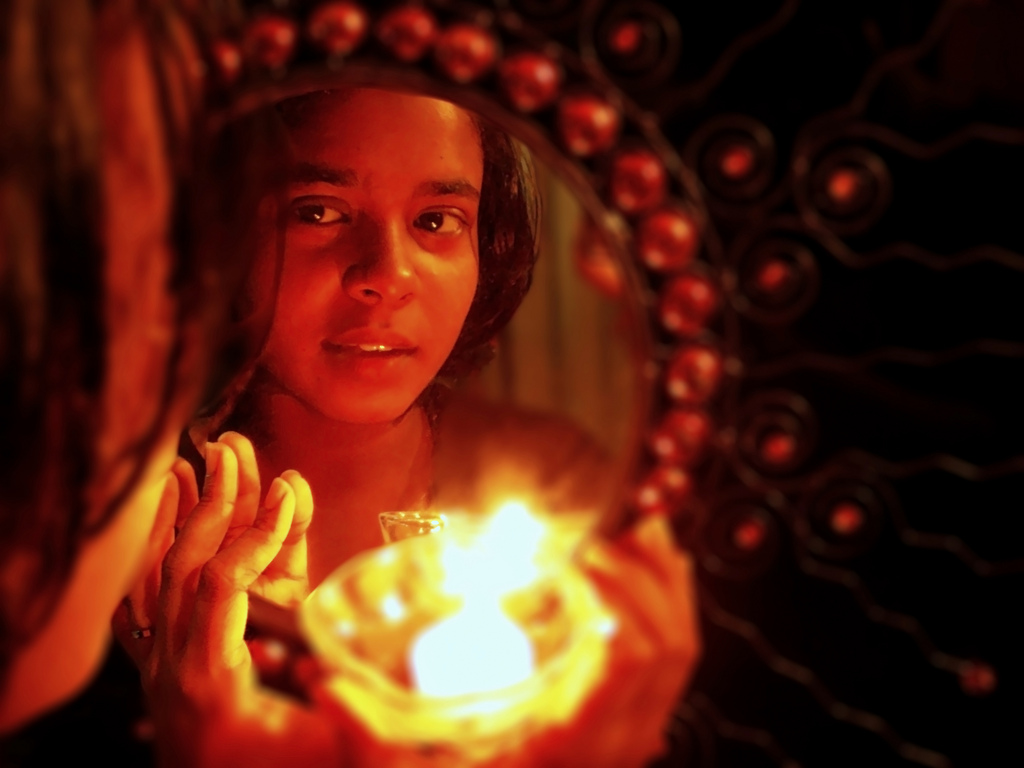
Edith Wharton has said that there are two ways of spreading the light: to be the candle or the mirror that reflects it. Sometimes we are the candle. We shed light of love and hope. We shine encouragement into dark souls, for this is a bleak and cold world for too many people, a frightening and lonely place in need of light. Francis of Assisi got it right: “All the darkness in the world cannot extinguish the light of a single candle.” 

But sometimes we are the mirror that reflects light. We reflect back what we see in others to help them see their own light -- their own goodness and beauty, their own strength and resiliency and resourcefulness. 

There are two ways of spreading light -- to be the candle or the mirror. Which are you?

-- Steve Goodier

Image: flickr.com/Ath-har Saeed


Monday, September 22, 2014

Purveyors of Hope


Are you one?


Have you noticed that you feel better around some people than others? You smile more in their presence and afterward feel a little lighter, a bit more cheerful? I think of those people as “purveyors of hope.” They help me to know that beyond every mountain I face there is a path...even if I can't see it from the valley. I need those kinds of people – those purveyors of hope – in my life.

John Chapman, born in 1774 in Massachusetts, was a great purveyor of hope in his day. In the early 1800's he got in on the opening of land in the Northwest Territory, as it was then called, of the new United States. He found small plots of land suitable for farming and cleared them by hand. He bought fruit seed in Pennsylvania every year and carried it to his many apple orchards, usually on his back.

When the trees were large enough to transplant, he sold them to settlers homesteading the West. Eventually, he had little apple orchards spread around what would become the states of Ohio, Michigan, Illinois and Indiana. Most people forgot, or never knew, his real name, and took to calling him Johnny the Apple Man or Johnny Appleseed.

Johnny was a gentle man with a big vision. He was liked by most people who knew him, the native Indians and white settlers alike. His vision was to spread the goodness of apple trees everywhere people settled. Apples, he believed, gave the promise of harvest and hope that the wilderness would become home. Every tree he grew was a symbol of hope.

Johnny had another curious habit. He loved books, but did not have the means to carry more than two, usually a Bible and a book of inspiration or theology. The books he chose were full of hope. Because Johnny wanted to share his books, he carefully cut chapters out of whatever inspirational book he had available and loaned one or two chapters to families that wanted to read, or simply needed a lift. He'd later swap those chapters for others when he came back through. In this way he spread some hope and encouragement wherever he traveled.

His grave can be found today in Fort Wayne, Indiana. It says, "
John Chapman (Johnny Appleseed). He lived for others."

Johnny was a great purveyor of hope. This old world could use a few more of his ilk. You?

-- Steve Goodier


SHARE this message with your Facebook friends.
"LIKE US" on Facebook where you can find a powerful daily quote.

Monday, September 8, 2014

Driving Away the Shadows

Image by Frank Gruber

Here is a little habit that can make a big difference.


How do you drive away shadows?

Apparently, when Abraham Lincoln was fatally shot at Ford's Theatre in Washington, D.C., he was carrying two pairs of spectacles and a lens polisher, a pocketknife, a watch fob, a linen handkerchief, and a brown leather wallet containing a five-dollar Confederate note as well as several newspaper clippings on the Lincoln presidency.

The newspaper articles are a curiosity. Why did he carry them with him? The eight clippings found in his pockets were largely positive portrayals of his leadership, but the president was not egotistical. In fact, if we know anything about Lincoln, we know that humility was one of his most attractive virtues. Many historians stress that his possession of these clippings was less proof of a president's ego than of a man who needed reassurance. The recently- ended war had been long and costly. His re-election campaign had also been a difficult slog. Lincoln rarely knew a day without public criticism. The newspaper articles would have been affirming to him.

Historians are aware that Abraham Lincoln suffered from bouts of serious depression. Could it be that in those "dark nights of the soul," when despair settled over his mind like a cold and heavy snow, that he could reach into his pocket and find hope? Could it be that these words reminded him of what he had dedicated his life to, the good he had tried to do and the lives he had affected?

Francis of Assisi once said, "A single sunbeam is enough to drive away many shadows." Maybe each newspaper article was a sunbeam that he collected and kept with him.

Have you collected sunbeams? Have you saved away letters and mementos that warm your heart and encourage you when you need a lift? They can drive away many a dark shadow.

Dale Carnegie tells us this: “You have it easily in your power to increase the sum total of this world’s happiness now. How? By giving a few words of sincere appreciation to someone who is lonely or discouraged. Perhaps you will forget tomorrow the kind words you say today, but the recipient may cherish them over a lifetime.”

Here is little habit that can make a big difference. Send sunbeams. Intentionally send a word of encouragement or appreciation every day to one person. Plan ahead. Keep open to those who need a lift. A letter, card or email will suffice. Or a phone call. It can be short, but must be personal and it must be sincere. 

Occasionally you'll learn what a difference your communication made. Sometimes you won't. But know this – as you drive away the world's shadows you will also fill your life daily with a little more joy.

-- Steve Goodier


SHARE this message with your Facebook friends.

"LIKE US" on Facebook where you can find a powerful daily quote.

Monday, January 20, 2014

Finding the Way Out of Bagamoyo


You've heard the stories. Cruel slavers in bygone years trek into the African interior and capture men, women and children to sell on the slave market. Then, for weeks upon end, they march their captives to the African coast and force them to board ships bound for the New World.

During those long marches from remote villages, newly acquired slaves were made to carry their captor's heavy loads. Historians report that, at the end of an excruciating day, as evening approached, slavers sometimes shouted to their captives in Swahili, "Bwaga mizigo," which means, "Put down your burdens." Only then could they rest.

When the slaves finally reached the coast, they laid down those burdens for the last time. There they boarded ships that took them away from their loved ones and their homeland forever. Some called that place "Bagamoyo," from the words "bwaga" (put down) and "moyo" (heart). Bagamoyo translates to "Put down your heart." In hopelessness and despair, they put down their hearts and left them on the African continent.

Bagamoyo. I've been there. Haven't you? We've been to our own personal places of despair. Imprisoned by fear and worry and doubts. Trapped by grief. Or betrayed by our own bodies – left to languish in illness and pain. We know how it feels to give up. We know how it feels to desperately wonder if we can go on, or even should go on.

And more than once I've been tempted to lay down my heart and leave it behind. Haven't you? I think we've all been to our own Bagamoyos, those places of deep despair.

But here is the hope. If life teaches me anything, it teaches me that my personal Bagamoyo may be a way-point, but I shouldn't make it a destination. We will each find ourselves there from time to time, but it is not a place to remain permanently. Life cautions that I should never lay my heart down in despair never to pick it up again. There is usually a way through our personal Bagamoyo.

Author and playwright Jean Kerr put it like this. She said, "Hope is the feeling you have, that the feeling you have, isn't permanent." Hope does not deny the terrible place in which I may find myself. Oh, that's real enough. But it reminds me that Bagamoyo is only a temporary place. It may seem like a place I'll never leave, but I will. And sometimes it's just enough to know that.

So I've learned to believe in tomorrow. When I believe in tomorrow I can pick up my heart today. When I believe in tomorrow, I can find my way out of Bagamoyo.

And when I do, I'll find my way to life.


-- Steve Goodier


Image: http://www.scottliddell.com/

Thursday, February 14, 2013

Humor Can Make a Serious Difference

Image courtesy of ramzi hashisho

Thomas Watson, former CEO and chairman of IBM, was famous for putting the word “THINK” on prominent walls of every IBM building. The tradition has carried on into modern times. Not long ago in a restroom at IBM's Watson Center, a supervisor placed a “THINK” sign directly above the sink.
 

The next day, when he entered the restroom, he glanced at the sign.  Just below it and immediately above the soap dispenser, someone had carefully lettered another sign that which read: “THOAP!”
 

How often do you laugh at work? Actually, humor can make a serious difference. In the workplace, at home, in all areas of life – looking for a reason to laugh is necessary. A sense of humor helps us to get through the dull times, cope with the difficult times, enjoy the good times and manage the scary times.
 

Case in point: six-year-old Hannah. Hannah encountered one of the most frightening times of her life when she discovered she had cancer. Six years old and she might not live. And if she were to give life a shot, Hannah would have to endure painful, almost endless medical treatments. At one point she lost all her hair due to chemicals pumped into her tiny body. On days when she felt strong enough to get out, she often covered her head.
 

One day while shopping with her mother, Hannah donned a ball cap with a fake pony tail sewn into the back. Unless one looked closely, she looked as if she had a full head of hair. Before long Hannah noticed a small boy staring at her as if he were trying to figure out what was slightly off about the girl. She tried to ignore him, but he followed her around the store. Finally, she ripped off her cap revealing her shiny, hairless head. In a stern voice she warned, “This is what happens when you don't eat your vegetables!”
 

I don't know what became of the boy, but I suspect he is now a committed vegetarian. As for Hannah, her sense of humor helped get her through one of life's scariest times.
 

Like entertainer Bob Hope once said, "I've seen what a good laugh can do. It can transform tears into hope." And sometimes, a little more hope is all we need.
 

-- Steve Goodier

SHARE this message on Facebook

 "LIKE US"on Facebook and get a powerful quote every day on your FaceBook page. 

Friday, April 20, 2012

No Hopeless Situations


There is a wonderful urban legend circulating about a man who is trying to land a job as an assistant professor in a university. His application was rejected and he writes the following response:

 Herbert A. Millington
Chair - Search Committee
412 A Clarkson Hall, Whitson University
College Hill, MA  34109


Dear Professor Millington,

   Thank you for your letter of March 16. After careful consideration, I regret to inform you that I am unable to accept your refusal to offer me an assistant professor position in your department.

   This year I have been particularly fortunate in receiving an unusually large number of rejection letters. With such a varied and promising field of candidates, it is impossible for me to accept all refusals.

   Despite Whitson's outstanding qualifications and previous experience in rejecting applicants, I find that your rejection does not meet my needs at this time. Therefore, I will assume the position of assistant professor in your department this August. I look forward to seeing you then.

   Best of luck in rejecting future applicants.

Sincerely,

Chris L. Jensen
If it is true that you can tell how big someone is by what it takes to discourage that person, then this is a man who must be massive. I might say the same thing about a boy who, in real life, was not so big. But he was difficult to discourage and so he showed himself to be a giant on the inside.

Some 40 years ago, when he was only 11 years old, Morgan Rowe lost his left arm and much of the use of his right arm. It happened when he fell off a tractor at his father's fence company in Valdosta, Georgia, and was dragged beneath the machine. Morgan's left arm was destroyed and his right, mangled.

Young Morgan was released from the hospital after three-and-a-half months. The first thing he set out to do was to help pay the bills -- $30,000 worth. That was a lot of money back then as it is now. For a boy of 11 to accomplish such a task, the situation seemed hopeless.

For five years Morgan scoured roadsides picking up cans and bottles. He collected thousands of cans and collected and sold newspapers. He never gave up hope. First, he paid off the $455 ambulance bill. Then he put $2,500 down on the hospital bill.

He was still a long way off though his parents raised another $9,000 toward the debt.

People began to hear about the injured boy and eventually some 2,000 donations poured in, totaling $25,000. The bill was paid in full! Morgan set aside the additional money for future education.

What then? Though the bill was paid up, Morgan kept his projects going to collect money for the hospital so he could help others.

Someone forgot to tell the boy he was too injured for that kind of work. Someone forgot to tell him that the situation was hopeless. Somehow young Morgan didn't realize that an 11-year-old boy could never pay off a hospital bill so large.

Church reformer Martin Luther once said, “Everything that is done in the world is done by the hopeful.” And entertainer Dinah Shore observed, “There are no hopeless situations – only people who are hopeless about them.” Morgan Rowe should know.

I will not always be young and strong. My life circumstances can change in an instant. My health may leave me and I may lose people who are important in my life. But there are no hopeless situations. So I won’t easily turn loose of my hopeful outlook, even when things seem bleak. Without hope, I’m lost. But with it, I suspect that any situation can be creatively redeemed.

-- Steve Goodier

Share this on FaceBook and Twitter / Read more /Post a comment 

Image: flickr.com/C. Ryan

Monday, January 23, 2012

Dreams Are Renewable

Are you too old to get married? Several years ago, Jim Gorringe, 99, and Dinah Leach, 84, wedded at the St. James Rest Home in Christchurch, New Zealand. Both had been previously married and great, great grandchildren attended the ceremony.

Just before the wedding, the groom quipped, "We won't be having children."


I wonder if this is the same older couple who stopped by a pharmacy a couple months before their wedding. They told the pharmacist they wanted to get married. "Do you sell heart medication?" they asked. He said that of course they do.

"Then how about medicine for circulation?"

The druggist replied, "All kinds."

"Do you have drugs for rheumatism, arthritis, memory problems and scoliosis?"

The pharmacist assured them that they had a wide array of medicines for all of those problems and more.

"And you sell wheelchairs, walkers and canes?"

"Absolutely," said the druggist. "Whatever you need."

They looked at each other and smiled. "Great!" the bride-to-be said. "We’d like to register here for our wedding gifts."

You have to admire their enthusiasm. They may have old memories – that is a gift of age. But they also have young hopes.

Author and television personality Hugh Downs reported some good news for seniors. He said that when older adults are properly motivated, their intelligence does not wane. In fact, the ability to organize thinking may actually increase as folks age. Many people in their 50's, 60's and even 70's can go through college with greater efficiency than at 18.

Adults over 70 years of age have contributed richly and in varied ways.

  • Emmanuel Kant wrote his finest philosophical works at age 74.
  • Verdi at 80 produced "Falstaff" and at 85, "Ave Maria."
  • Goethe was 80 when he completed "Faust."
  • Tennyson was 80 when he wrote "Crossing the Bar."
  • Michelangelo completed what may have been his greatest work at age 87.
  • At age 90, Justice Holmes was still writing brilliant American Supreme Court opinions.

And then there's George Dawson. George learned to read at age 98. (He was forced to quit school when he was a small child in order to help support his family.) "I got tired of writing my name with an 'X,'" he said. Four years later, at age 102, he co-authored his autobiography, Life Is So Good, published by Random House.

Dreams are renewable. They need not expire like an over-due library book. No matter our age, we can breathe new life into old dreams. In fact, we have to renew our dreams, or else they will wither away altogether.

I don’t want to spend my life so busy looking back that I lose interest in what lies ahead. As I age, I will have old memories. But I also want a few young hopes.

After all, dreams are renewable.

-- Steve Goodier


 Share this on FaceBook and Twitter / Read more /Post a comment 

Tuesday, January 17, 2012

Do-Overs


Even if you’re not from Washington D.C. you may have heard of former Mayor Anthony Williams. He has a remarkable story. Williams was born to an unwed teen who gave him up. He was known as a "problem child" in foster care. By age three, little Anthony had still never spoken a word. It seemed that a pattern for his life was set, that is, until two warm and caring people took a chance on him.

Anthony was taken in by an opera-singing postal clerk and her equally generous-hearted husband. He soon began to speak and eventually thrived in their home. He excelled academically and later attended both Harvard and Yale Universities.

In 1998, he came from obscurity to win 66% of the vote to become mayor in one of the world’s major cities. In his inaugural address, Williams said: "Forty-four years ago, my parents adopted me and gave me a second chance. I feel this city has now adopted me and I will give to it everything my parents taught me about love, service, commitment."

It’s no doubt that, had he never been adopted into his particular family, his life would have been wholly different. He was saved by a second chance. And haven’t each of us been given second chances? He got a do-over on his birth family. Haven’t we been given do-overs on relationships, jobs, blown opportunities and the like? Quite often second chances are the result of the generosity of someone who cares a great deal. And sometimes we are saved by those second chances.

Author Dr. Seuss says in his book The Lorax, "Unless someone like you cares a whole awful lot, nothing is going to get better. It's not."

I recently came across a story of a young American woman who was saved by a do-over. During the second World War, she lost her husband. He died in India of a tropical disease and she became despondent. In time, despair turned into depression and she lost all interest in living. She just didn’t care anymore.

She booked passage on a ship back to America. On the voyage, she became acquainted with a seven-year-old boy who, like her, was all alone. His parents had died in the fighting in Burma. He seemed to want to be with the young woman, but her pain would not allow it. She wanted nothing to do with him and avoided him whenever possible. She felt so ravaged by loss, that she was unable to get outside of herself and care about anyone else. And she certainly did not have the energy to take on someone else’s problems.

Then one night the ship was torpedoed. The young woman made her way to the deck and prepared herself to go down with the doomed vessel. Some part of her actually welcomed it as an escape from her pain. The child, too, came on deck. He shivered with cold and fright. When he spotted the woman, he came over and clung to her.

That was when a lump of ice melted somewhere deep inside her. She put her arms around the child and led him to one of the lifeboats. For several days, as they waited to be rescued, she held him and he held her. Years later her friends would say that they didn’t know whether the woman saved the boy, or the boy saved the woman. They each gave the other a second chance at life and a do-over on love.

"Unless someone like you cares a whole awful lot, nothing is going to get better. It's not."

But it’s the people who give do-overs who truly change the world.

-- Steve Goodier

Image: flickr.com/Radoslaw Kut

Wednesday, April 20, 2011

The Gift of Music


“Time can bring you down, time can bend your knees.
Time can break your heart, have you begging please.
Beyond the door there's peace I'm sure,
And I know there'll be no more tears in heaven.”

These lyrics were penned in response to tragedy, when guitarist Eric Clapton’s son Conor fell to his death from a New York high-rise window. The music helped him heal.

In 1994 the city of Sarajevo was daily under siege. Mortars and artillery fire instantly transformed once beautiful buildings into rubble. Sarajevo’s citizens were frightened, weary and increasingly despondent. Then, one February day, a mortar shell exploded in the market killing 68 civilians. Many more were wounded and maimed from the blast.

A cellist with the Sarajevo symphony could no longer stand the chaos. He took his cello to the market, sat down amidst the rubble and played a concert. When he finished, he simply took up his instrument and left.

Every day, for 67 days, he came to the market. Every day he played a concert. It was his gift to the city. He did it because he felt his community must find a way to survive, and music can bring hope.

Music is a great gift. When I need to start my day in the right frame of mind, sometimes I’ll sing. Music aligns my thoughts and emotions; my mind and spirit. When I awake in the middle of the night, I go back to sleep best if I sing in my head. Music calms and centers. When I find myself experiencing a moment of happiness, I’ll sometimes sing out loud. (It works best when others are not present.) Music expresses joy like nothing else can.

One of the greatest cellists of all time was Pablo Casals. He exiled himself from his native Spain during the regime of Francisco Franco and became a world citizen and a great humanitarian. Casals passionately desired that the world exist in peace and harmony. He said once that if all the orchestras in the world were to play Beethoven's 9th Symphony simultaneously, then peace would come to the world.

I wonder if that is true. But if not peace, then perhaps joy might come. Or hope. Or healing.

It’s the gift of music.


-- Steve Goodier

freeimage.com/maggie

Monday, June 7, 2010

You Have a Chance


Charles Revson, founder of the successful cosmetic manufacturing firm Revlon, once said, “In our factory we make lipstick. In our advertising, we sell hope.”

We could use a little more hope. I think that is why people buy lottery tickets. One poor mother, who was raising her children on a small salary earned from long hours of hard work, was asked, “Why do you waste your money on a lottery ticket when you can hardly make ends meet?”

“Yeah, I buy a ticket every day,” the woman acknowledged. “But a dollar is not too much to pay for 24 hours of hope.”

There are probably better uses for her money than buying lottery tickets. But she would rather hang onto a little hope than onto her dollar.

We need hope. It is a vital ingredient in life. Without it, far too many people come to the conclusion that they are powerless in the face of difficulties. "It can't be helped," is their motto. Without hope, they won't make needed changes. They feel powerless. Without hope, they will grimly accept the unacceptable and believe that things are about as good as they will ever get.

I've found that I can either be a prisoner of circumstances or a practitioner of hope. I can feel sorry for myself and helpless to do anything about my problems, or I can believe there is a realistic chance for something better.

Norman Cousins, in his book Head First, the Biology of Hope, illustrates the power of hope. He tells of two physicians who were to deliver a paper at a national meeting of cancer specialists. One was truly perplexed. “I don’t understand it, Bob," he said. "We use the same drugs, the same dosage, and the same schedule of treatment. Yet I get a 22% recovery rate and you get a 74% recovery rate. How do you explain that?”

The other responded, “We both use Etoposide, Platinol, Oncovin, and Hydroxyurea. You put those letters together and tell people that you are giving them E-P-O-H. I put them together and explain to them that they are receiving H-O-P-E. I emphasize that they have a chance.”

You do have a chance. You have a chance at life. You have a chance at success. You have a chance at wholeness. You have a chance at meaningful relationships and, though you may not believe it, at happiness.

Are you a prisoner of circumstances … stuck and helpless, or a practitioner of hope? It can be a difference between life and death.

-- Steve Goodier

Image: flickr.com/Diana Robinson

Tuesday, March 23, 2010

Turn ... and Come Round Right


Not long ago a commercial airliner, whose pilot was new to New York, landed at JFK Airport. He steered the jet onto a taxiway and stopped. Then slowly he began turning. First he nosed the aircraft to the right. Then to the left. Then he turned the plane completely around.

Finally, over the public-address system, a confused voice asked, "Does anyone know where Gate 25 is?" He thought that by turning he'd see where to go and end up where he ought to be.

Deciding to turn, or change direction, is a wonderful metaphor. It is something we often have to do if we are to live fully and live well. For each of us knows what it is to head the wrong direction in life; and we also know how relieved we feel to turn around again.

Do you remember the old Shaker hymn, written by Joseph Brackett, Jr. over 150 years ago?
'Tis the gift to be simple,
'tis the gift to be free,
'tis the gift to come down where you ought to be,
And when we find ourselves in the place just right,
It will be in the valley of love and delight.

When true simplicity is gained,
To bow and to bend we shan't be ashamed.
To turn, turn will be our delight,
'Til by turning, turning we come round right.
It's amazing how many times I turn in a day. I turn up to things I want to attend and turn down others. I turn in at the end of the day and turn over all night long. And when things are not right, I can always turn them around.

Actually, turning is one of the most hopeful words I know.

When I'm not right, I can turn in a new direction. By turning, I do something about the course I've taken. I may not be able to change what I've already done; and I may not be able to fully escape those unpleasant consequences of past choices. But I need not continue in the same, destructive path. I can turn. I can find my way again.

Turning around is allowed in this life. In fact, it's necessary. Especially after mistakes and failures. And that's like hope for me. Like the song says, "'Tis the gift to come down where you ought to be." But when we don't find ourselves where we ought to be, "by turning, turning we come round right."

-- Steve Goodier

Friday, January 2, 2009

Little Things Make a Big Difference


When I was in college, I shared an American Thanksgiving supper with friends. We spent the day cooking together – turkey, potatoes, green beans, yams and, of course, dinner rolls. I was in charge of the rolls. Looking back, that may have been a mistake.

I love to eat raw dough. Most any kind will do – cookie dough, cake batter, biscuit dough, bread dough – you get the idea. So I rolled out the yeast dough, sliced off a corner and ate it, rolled some more, sliced and ate, rolled, sliced, ate…. I don’t know how much of the dough I consumed before the rolls hit the oven, but I remember it as a wonderful afternoon. Until about a half-hour later.


Yeast, it seems, likes a dark, moist, warm environment. In me, it found one and did what yeast does best – it grew. And grew. And grew.


After a while my stomach was distended and I felt like the Pillsbury Dough Boy with a burping disorder.


It was soon time for supper and I felt too full to eat anything. All of that scrumptious food and I couldn’t eat.


That day I gained a new respect for the power of yeast; it doesn’t take much to make a big difference.


Little things make a big difference. Little things like yeast. Little things like kindness.


Douglas, a fifteen year old boy who lived in Missouri (USA), had been feeling badly for several days. His mother Donna took him to the emergency room where blood tests revealed one of the most frightening things a parent can learn about a child. Her son was diagnosed with leukemia.


Douglas’ life changed. He began a routine of blood transfusions, spinal and bone marrow tests and chemotherapy. The physical trauma was one thing, but he also became depressed. And who wouldn’t? He lost his former life, his healthy self. All of those exciting dreams and plans a young boy has for his future vanished, and in their place all he could see was somebody with cancer. Somebody who may or may not live long. Somebody whose life would be very different than before.


He had a good hospital and good doctors. But it he did not have hope. And without it, he was in serious jeopardy.


Douglas’ aunt called a florist close to the hospital. She wanted the sales clerk to be aware of the flower arrangement’s significance. “I want the planter to be especially attractive. It’s for my teenage nephew who has leukemia,” she told the clerk.


“Oh,” said the sales clerk. “Let’s add some fresh-cut flowers to brighten it up.”


When the floral arrangement arrived Douglas opened the envelope and read the card from his aunt. Then he saw something unusual. It was another card. The second card read:


“Douglas--I took your order. I work at (this floral shop). I had leukemia when I was seven years old. I’m 22 years old now. Good luck. My heart goes out to you. Sincerely, Laura.”
Douglas smiled. He finally felt some real hope. And why not? Here is a person who had cancer as a child and now she is 22 and working! If she can do it, so can he. Douglas found what he needed. He found the will to live.

Little things make a big difference. Little things like kindness and encouragement and hope. Little things all of us can give.


And it doesn’t take much to make a big difference.


-- Steve Goodier

Monday, June 30, 2008

A Sliver of Hope


Jean Kerr said, "Hope is the feeling you have that the feeling you have isn't permanent."

I like that. Hope is what we have when we know that the night will soon be over. Hope is what we have when we somehow know that dawn is coming.

It seems that hope is in short supply these days. Which is why I like this story about "Robbie" Risner, who found that the tiniest bit of hope alone could keep him alive.

Brigadier General Robinson Risner ("Robbie") spent seven years as a POW at the "Hanoi Hilton," as prisoners of war called their North Viet Nam compound. It was horrendous. He endured four and a half years of that time in forced isolation. Four and a half years with no human contact; no conversation; no touch. The intent of his solitary confinement was to break his will.

And what's worse, ten months of that isolation were spent in total darkness! Robbie remembers that those ten months were the longest of his life. The day guards boarded up his little seven-by-seven foot cell, shutting out the light, he wondered if he was going to make it. He had already been under intense physical and mental duress after years of confinement. And now, not a glimmer of light shone into his cell -- or into his soul. It seemed hopeless.

Robbie spent hours a day in the dark exercising and praying. But at times he felt he could nothing but scream. Not wanting to give his captors the satisfaction of knowing they'd broken him, he stuffed clothing into his mouth to muffle the noise as he screamed at the top of his lungs.

Hope came in the form of a single blade of grass. One day Robbie got down on the floor and crawled under his bunk. He located a vent that let in outside air. As he pressed against the vent, he saw a faint glimmer of light reflected on the inside wall of the opening. Robbie put his eye next to the cement wall and discovered a minute crack in the construction. It allowed him to glimpse outside, but was so small that all he could see was one blade of grass. A single blade of grass and a faint ray of light. But when he stared at the sight, he felt a surge of joy, excitement and gratitude like he hadn't known in years.

In that single blade of grass he saw life and growth. And he saw freedom. As long as could gaze upon one little blade of grass, he could remind himself that his darkness would someday be over. Dawn would come again. He would live and, like the grass, he would thrive. It was only a sliver of hope, no larger than the tiny crack through which he gazed, but it could be enough.

If you could use a little more hope, try to find a sliver of light in your darkness. I suspect it's there. And it may not seem like much, but it might be enough to get you through the night.

-- Steve Goodier

Image by Allison Chopopick